
Local septic service in Christian County
Septic Tank Riser Installation in Ozark, MO
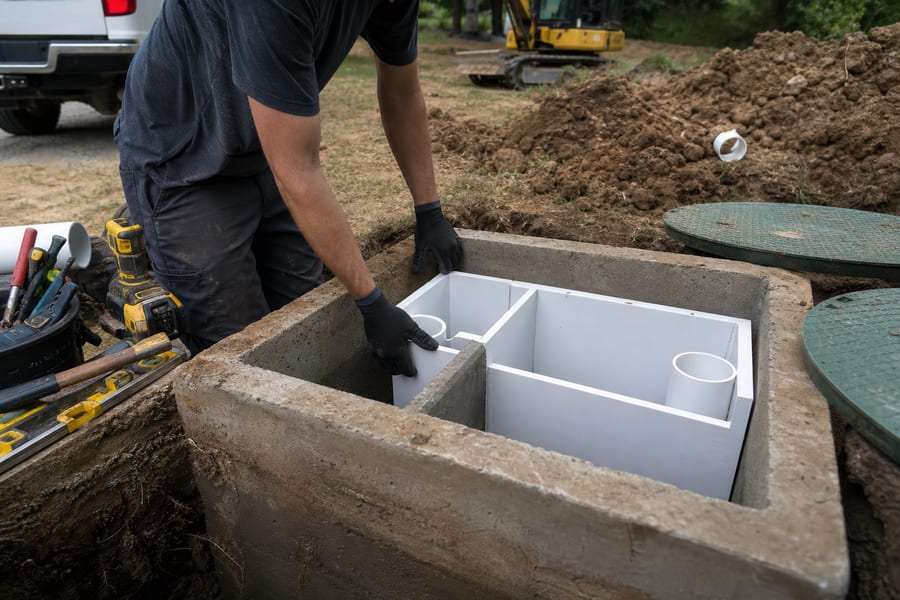
If your tank lid sits under a foot of soil, every pumping starts with a shovel and a locate fee. A riser is a round collar that extends the tank opening to ground level and caps it with a secure lid, so the crew opens it with a socket instead of an excavator. We install them on concrete and plastic tanks across Ozark, Nixa, Sparta, and the rest of Christian County — usually during a scheduled pump-out.
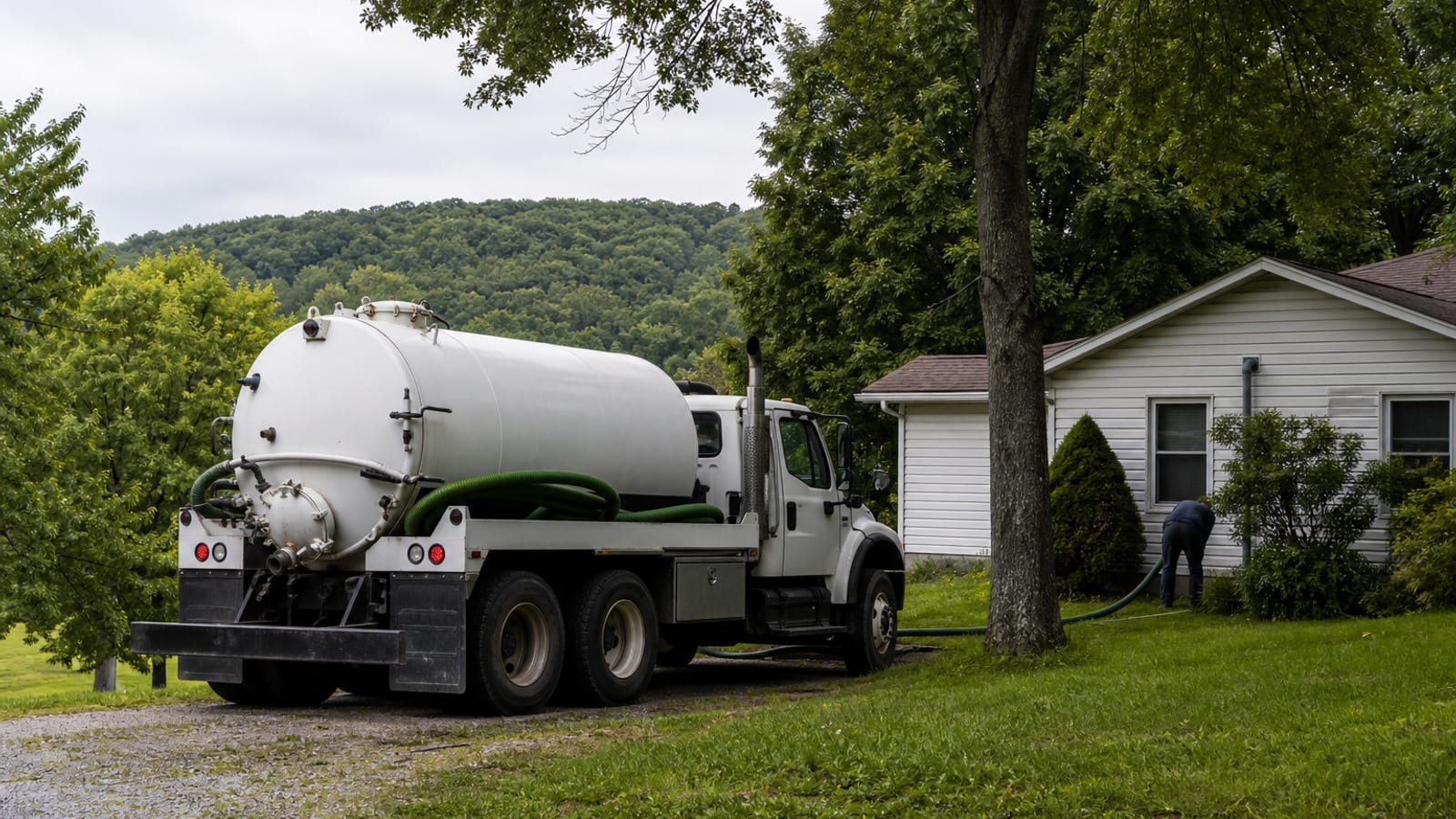
How a riser install goes, step by step
First we locate the tank and probe for the lid — plenty of older tanks were capped decades ago and ended up buried under fill, rock, or landscaping, so finding one can take longer than opening it. Once the lid is exposed and the tank pumped if that's on the ticket, we measure the opening, fit a riser ring sized to it, stack extensions up to grade, seal the joints, and set a tight, secured lid. If the tank is being pumped the same visit, we check both baffles and the effluent filter while it's open. You get a firm quote on-site before any digging begins, and most installs wrap up in the same visit, with the old concrete lid hauled off or left on-site as fill if you want it.
Why lids around Ozark sit deeper than you'd expect
Ozark sits on Finley Creek in Christian County, one of the fastest-growing counties in Missouri, and the ground here is Springfield Plateau country: Mississippian limestone and chert bedrock near the surface, with karst features like losing streams and sinkholes common across the region. On properties we service, lids end up buried when yards are regraded for new construction, fill and gravel get spread for driveways, or landscaping goes in over the tank. Rural parcels add their own covers — cleared lots, shifted fence lines, decades of leaf and silt buildup. The result is the same: an opening poured at grade forty years ago now sits a shovel's depth or more below it.
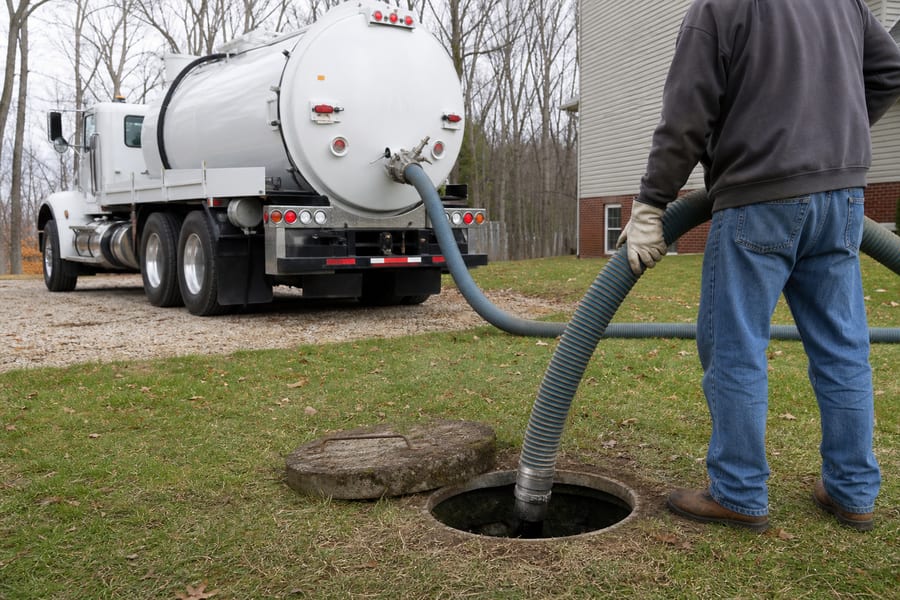
The math on digging versus a one-time riser
Once a lid is exposed, the pumping itself usually takes 45 to 60 minutes; locating and digging out a buried lid adds significant time on top of that, every single visit. A standard 1,000-1,250 gallon tank in typical family use needs pumping about every three to four years, so that excavation cost repeats a dozen times over the system's life. Many older homes still run smaller 750-gallon tanks, which shortens the interval toward every two years and makes the dig fee come around even sooner. Bringing the lid to grade converts each future visit into a quick lid-pull, which is why a riser installed while the tank is already open generally pays for itself. Riser and lid installs are among the common repairs that typically run a few hundred dollars — a fraction of what drain field work costs.
Riser height, lid security, and cold-weather questions
There's no single correct riser height: some homeowners want the lid flush with the lawn so the mower rolls over it, others want it an inch or two proud so it's always easy to spot. We set it to your preference and seal the base and joints so surface water stays out. As for winter, a properly seated, sealed riser lid is not something we've seen cause freezing on Ozark-area systems — the failures we do find are cracked lids and unsealed joints, both of which we check before we leave.
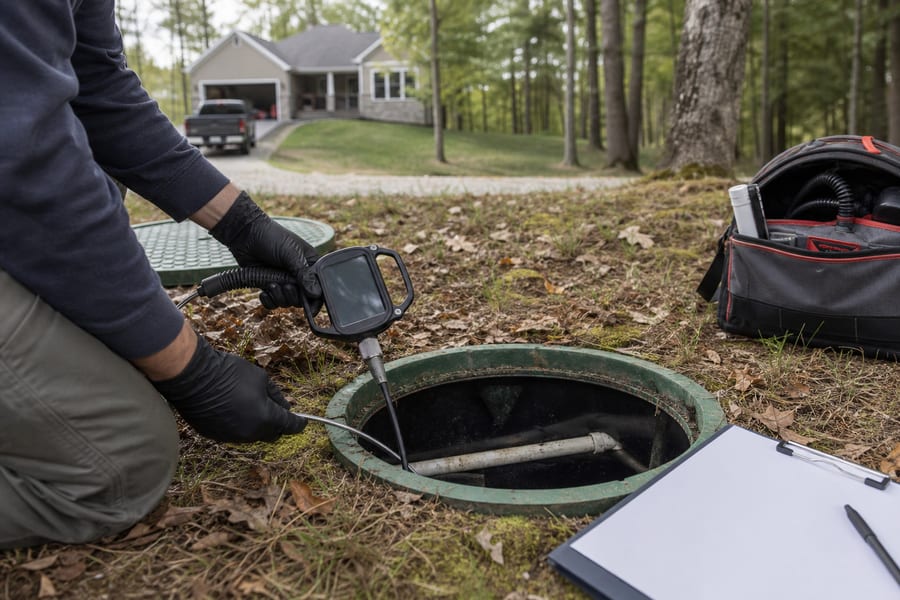
Cheapest time to add one: while the tank is open
The lid is already exposed during a pump-out or a baffle or effluent-filter repair, so adding the riser in the same visit skips the locate-and-dig charge entirely. Tell us the tank's approximate location and size when you call — if you don't know it, we find it the same way we would for any pumping. The riser goes on, the lid gets secured, and the next service visit for the life of the tank starts at the surface.
Frequently Asked Questions
What does septic riser installation typically cost?
Is a septic tank riser actually worth adding?
How far above the ground should a septic riser sit?
Will my septic tank freeze in winter after a riser is installed?
Also from Finley Creek Septic
Related services in Ozark, MO
Next step
Request a quote for septic tank riser installation
Tell us where you are and what is happening. We will confirm the sensible next step and a price range.